Denim Tears Resale Prices: What Really Holds Value
Ask three people who actually collect this label what a Denim Tears piece is worth and you get three answers, none of them obviously wrong. Treat this label’s resale market as weather instead of a price list: the pattern shows up across many listings, though any one day is unreliable. Across 2026 the picture looks roughly like this: a few categories keep their retail value, others fall away, and particular conditions move the numbers both ways. All of this is a description of market behaviour, not a prediction and not financial advice; prices on the secondary market can and do go down. The numbers are estimated ranges based on how listings tend to cluster, not confirmed transaction data, and no individual historical sale is quoted anywhere here. Their use is checking whether an ask looks sane and they should not be read as a valuation you can bank on. Bought to wear, a garment rarely disappoints; buy to flip and you frequently are.
Why Resale Prices Take Shape on This Label
Denim Tears runs on limited, irregular drops instead of continuous production, which is the structural reason resale exists at all. When a piece sells out in minutes and never returns in that exact form, the only supply left is whatever buyers decide to let go. In that market the ask follows scarcity and sentiment, rather than to cost of goods. The back catalogue is still thin by the standards of fashion — Tremaine Emory founded the label in 2019 — so genuinely old pieces are rare and priced accordingly. Sitting on top of all that https://denim-tears-sweatshirt.com/ is the cultural weight of the cotton wreath itself, a motif referencing the history of cotton, the transatlantic slave trade and African-American experience, which gives certain releases significance that outlasts a season. For what is on paper an identical garment, cheapest and most expensive listings can sit remarkably far apart.
The Three Variables That Set the Ask
Across 2026, three variables explain most of the spread you will see in asks. Release size comes first: it is unpublished, and buyers work it out from how fast listings vanished. Collaboration weight is the second, since pieces tied to Levi’s, Converse, Stüssy or Dior carry two collector bases rather than one. Wearability rounds out the three, and though it sounds soft it is measurable enough: pieces that work across seasons and body types keep their demand long after the hype has gone. A piece scoring high on all three tends to sit above retail indefinitely, while one scoring high on only hype fades within about six to twelve months. Worth noticing: condition is not among these three forces; condition adjusts the price but does not decide which band it sits in.
Category by Category: Where Value Holds
Nothing predicts whether a piece stays near or above original retail better than its category. The gaps between categories are wide enough that they swamp most other considerations, including colourway and season. Denim is at the top, fleece occupies a broad and stable middle, and light seasonal cotton sits at the bottom. The ordering has been reasonably consistent since about 2022, which is unusual for a streetwear label and reflects how central denim is to the brand’s identity. The three sections that follow take each band in turn, using estimated 2026 resale multiples measured against original retail. Read a “multiple” as a rough centre of gravity for asks, rather than a price you are guaranteed to get as a seller or pay as a buyer.
Collaboration Denim: The Strongest Band
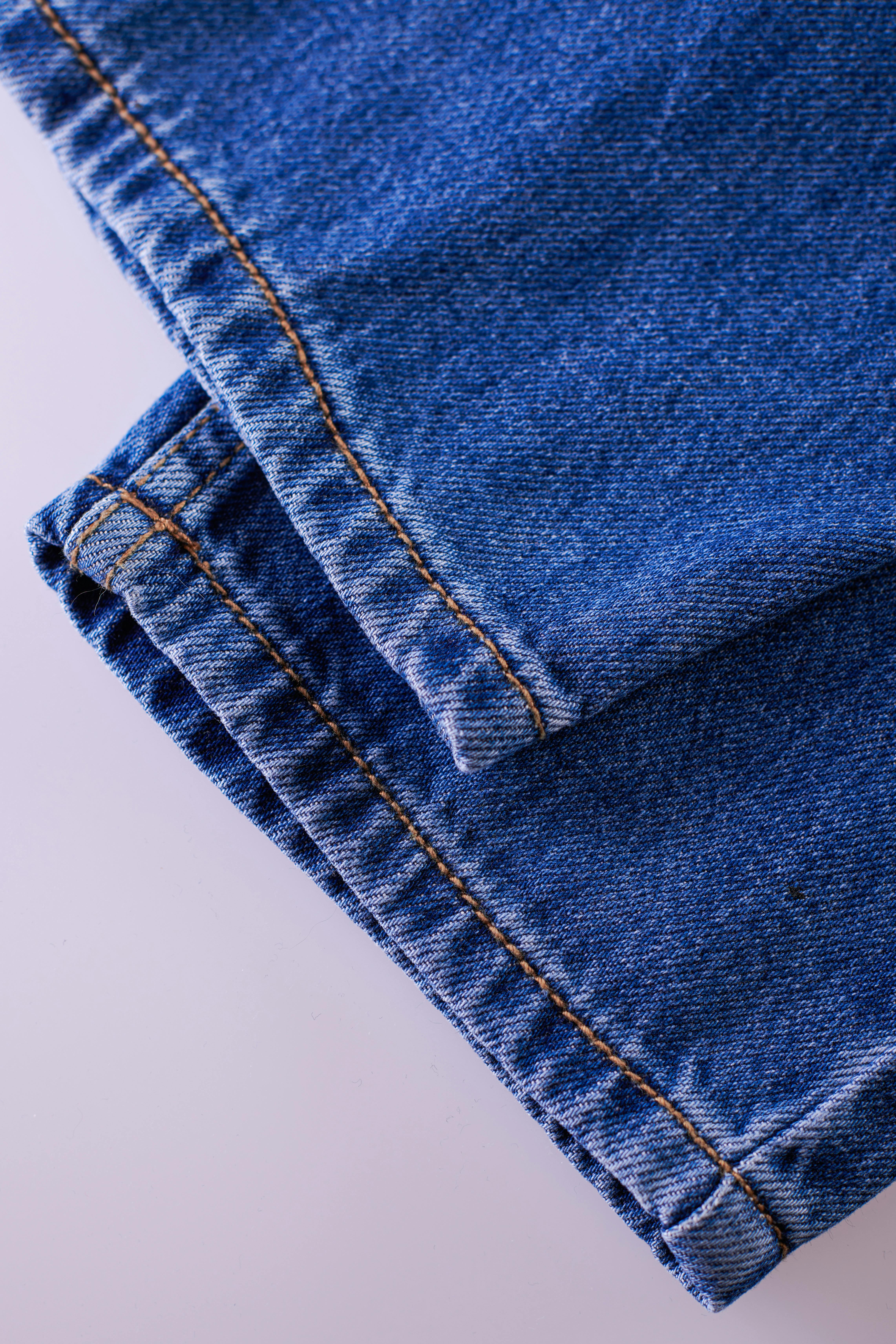
If the brand is known for one thing, it is the wreath-printed Levi’s 501 jeans — and the market’s pricing follows. Estimated 2026 asks usually fall somewhere between about 1.3x and 2.5x original retail, and earlier releases or unusual washes push toward the upper end. Given that original retail on denim tears jeans has sat in the $300-500 range, typical asks land roughly between $400 and $1,100, depending on the release and the size. Mid-range sizes hold best because they serve the widest pool of buyers, while either end of the size run sells slowly and usually at a discount. Wear hurts far less here than it does on printed fleece, as denim’s ageing is something buyers accept. Reissues are the clear downside risk: when a similar wash returns, existing asks tend to soften.
Hoodies and Heavyweight Fleece: Steady Rather Than Spectacular
A denim tears hoodie is the item traded most often on the brand’s secondary market, and volume tends to compress margins. Against original prices in the $250-400 band, estimated 2026 asks typically cluster between roughly 1.0x and 1.6x. In practice most hoodies change hands in the $280-600 range, with the higher figures attached to scarcer colourways and older seasons. Season matters for fleece too: asks firm up from October through December, ease noticeably in late spring, and the swing can be worth 15-25% on the same garment. The buyer pool is smaller in those categories, which leaves sweatpants and the woven denim hoodie trading thinner. With so many hoodies in circulation, a listing without clear photos of the print and cuffs simply gets passed over.
Tees and Shorts: The Soft Band
Lightweight cotton is where enthusiasm meets reality. Estimated multiples for tees in 2026 sit around 0.7x to 1.3x, meaning pieces that retailed at $100-200 often resell at or just below that. denim tears shorts show the same pattern on a sharper seasonal curve: strongest May through July, then weak as autumn stock arrives. Collaborations and short runs are the exception here, since they can move more like the denim band than the cotton one. Condition carries much more weight here than on denim, since prints on light jersey show wear sooner. Buyers get the least expensive way into the brand here; sellers get the category with the weakest case for holding.
| Type of piece | 2026 retail, estimated | Typical resale multiple | How it behaves |
|---|---|---|---|
| Denim collaborations (jeans) | $300-500 | 1.3x – 2.5x | Strongest of the bands; reissues soften asks |
| Hoodies and fleece | $250-400 | 1.0x – 1.6x | High volume, clear seasonal swing |
| Sweatpants and joggers | $250-350 | 0.9x – 1.4x | Thin trading, follows fleece |
| Shorts (summer) | $180-280 | 0.8x – 1.3x | Strongest May to July, then falls |
| Lightweight tees and shirts | $100-200 | 0.7x – 1.3x | Softest band unless it is a short run |
Where Value Quietly Leaks Away
Dramatic market shifts are rarely the culprit: most value goes through avoidable and thoroughly unglamorous causes. Nothing costs more on a graphic piece than print degradation, which is almost entirely down to washing. Alterations to the fit — a hemmed jean included — shrink the buyer pool to whoever happens to share those measurements. On worn pieces, missing original tags matter less than most people assume but noticeably on anything sold as deadstock. Odour, pet hair and smoke exposure end more sales than any of the above, as none of them can be assessed from a photograph, and buyers assume the worst. And timing, the quietest of them: posting a heavyweight hoodie in June is worth roughly 15-25% less than posting it in November.
Reading Condition Language Properly
Read the photographs rather than the condition grade: the platforms’ grades are compressed enough to mislead. “Deadstock” ought to mean unworn and tagged, and any listing that uses the word without a tag photo deserves a direct question. “Excellent” usually means worn a few times, with no print cracking visible under a close crop. Behind “Good” sit softened cuffs, mild pilling or an early loss of print density — and a real discount should follow. Treat anything labelled only “used” as roughly 20-40% below a comparable excellent-condition piece. As a seller you do better photographing flaws honestly than concealing them, as a dispute costs more than the gap in asking price.
- Cold wash, inside out, hung to dry to keep the print dense.
- Shoot the original tags before they come off, and keep them.
- Avoid hemming or tapering anything you may resell.
- Store it folded somewhere dry rather than compressed on a hanger.
- Fleece belongs in an autumn listing, shorts in a spring one.
A Realistic Way to Think About It
Set against most streetwear, Denim Tears holds value well; set against the best-performing corners of the resale market, it does not. Outside denim, condition, size and listing month decide most of it; denim is the category that most reliably stays above retail. A garment is not an asset, and the market has no obligation to reward anyone buying with resale in mind. Search listings as denimtears or look for a denim tear shirt secondhand and the spread on identical pieces is the same — proof enough that the posted number is an opinion rather than a price. Pay a price you would still accept if the market cooled by a third, and buy only pieces you actually intend to wear. Holding value is a nice bonus, and not the point of the purchase.